Integrated marine industry services
RAKTAUR connects commercial vessel requirements with ship sales, shipbuilding and repair, ship management, inspection coordination and maritime technical services. Our work brings vessel information, industry contacts and practical project support together for international customers.
The marine industry depends on cooperation between owners, operators, builders, technical teams and buyers. We approach each requirement as part of that wider system: understanding the work a vessel must perform, reviewing its particulars and bringing the relevant commercial and technical questions into one conversation.
Perseverance and self-reliance
Perseverance, self-reliance, fidelity and integrity provide a useful foundation for maritime work. Long-term projects require patience, independent judgement, dependable communication and a willingness to resolve difficult details. These principles shape the way we approach a vessel inquiry and the relationships around it.
The maritime heritage behind these principles reaches into the history of Chinese industry and education. Zhang Jian founded Tongzhou Normal School in 1902, an institution associated with the origins of Yangzhou University, and inscribed its motto in 1904. His shipping initiatives included Dasheng Steamship Company in 1900, Dada Inland River Steamship Company in 1903 and Shanghai Dada Steamship Company in 1905.
That history illustrates the connection between industry, education and maritime enterprise: developing technical capability, supporting trade and strengthening the marine economy.
Shipbuilding, investment and project coordination
Our marine activities cover newbuilding enquiries, investment-related vessel requirements, second-hand ship transactions and the technical coordination needed to move a project forward. The focus is on matching a vessel and its equipment to the intended operation.
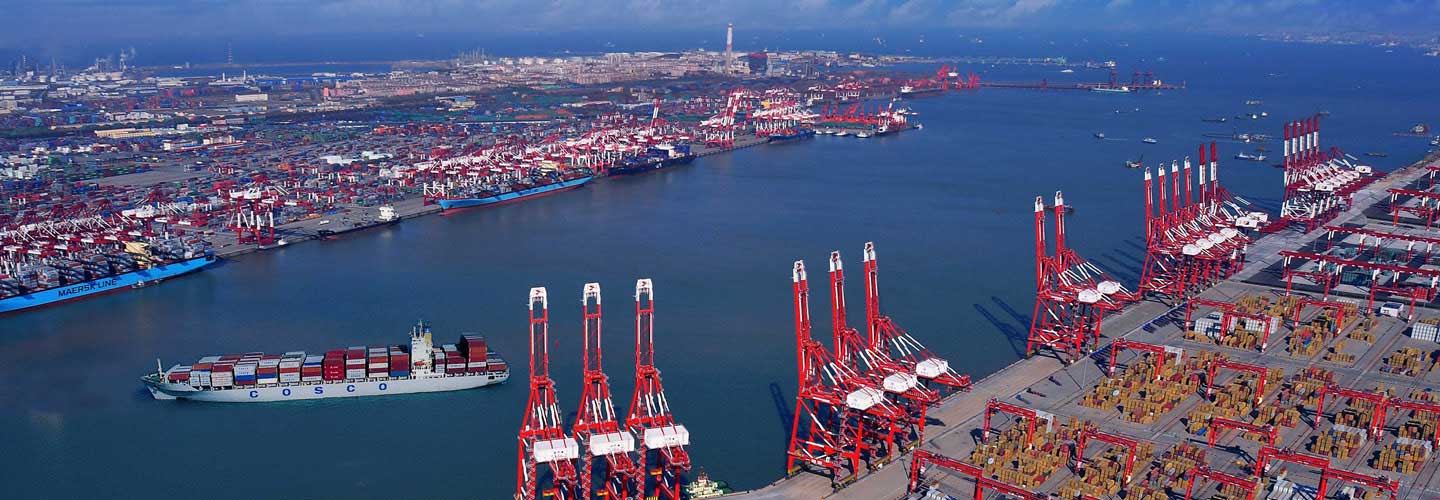
A vessel project may also involve port machinery, supporting equipment, delivery planning and logistics. Considering these requirements alongside the ship itself helps the parties assess the overall scope, documentation and practical steps of a transaction.
Offshore vessels, barges and commercial ships
The offshore vessel portfolio includes anchor handling tug supply vessels (AHTS), platform supply vessels (PSV), stand-by vessels, traffic vessels and other offshore support vessels. These vessels support specialist operations and are assessed against the technical and operating needs of each project.
The barge range includes LCT-type self-propelled barges, dumb deck cargo barges, flat-top barges and other deck cargo vessels. Tugboats, harbour tugs, cargo and container ships, tankers, passenger vessels and other working ships are also represented in the catalogue.
Commercial cargo requirements may involve dry bulk, oil, raw materials, specialised chemicals, liquefied natural gas or containers. Dry cargo operations include major commodities such as iron ore, coal and grain. The vessel’s particulars, capacity, arrangement and trading area are central to evaluating its suitability.
Support throughout a vessel’s lifecycle
Marine requirements continue throughout the life of a ship. The scope may begin with a newbuilding contract, move through operation, maintenance and repair, and later involve resale or demolition. Port agency and technical services support the vessel at different stages of that journey.
The sales and purchase function covers newbuilding contracting, resale of second-hand vessels and end-of-life vessel enquiries. Technical coordination brings inspection requirements, machinery information, maintenance needs and project documentation into the process.
Specialist markets and offshore operations
Offshore sales and purchase enquiries and local chartering requirements can involve vessels used in oil and gas exploration, telecommunications and other specialised marine markets, including marine mining. These projects call for an understanding of vessel capability as well as the operating environment.
Owners and buyers need clear information on the type of work, the vessel’s configuration and the supporting commercial conditions. Market information, technical particulars and direct communication all contribute to a better-informed assessment.
Market knowledge, analysis and consulting
Ship information, applied research and ongoing market analysis are important parts of marine decision-making. Market conditions change, and customers need a considered view of the information available rather than a single isolated listing.
Marine market knowledge also supports discussions about commercial exposure, financial arrangements and risk management. Consulting, technical review and market research help customers identify the questions that need to be resolved before a project proceeds.
Local understanding and international cooperation
International marine transactions depend on local knowledge as well as an understanding of the wider market. Coordination between owners, builders, suppliers, buyers and technical specialists helps a project move across different locations and business practices.
Our approach is to maintain clear, personal communication from the initial requirement through the next stage of the project. Whether the enquiry concerns a single working vessel or a wider marine programme, we review the scope and respond to the specific challenge.
RAKTAUR can be contacted through its Tianjin office, by telephone or by email. Browse the vessel particulars, share your operating requirements and speak with our team about the next step.